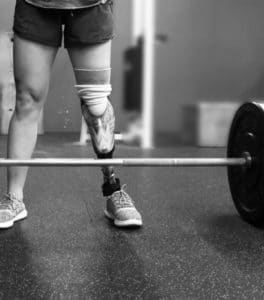
Adaptive Band Workouts
Adaptive fitness focuses on making exercise accessible and effective for all people of all abilities. Resistance bands are a great tool for adaptive training because they are versatile, portable, and easily adjusted to match different strength levels and mobility needs. Adaptive band training empowers individuals to move with confidence, build functional strength, and participate in fitness in a way that works for your body.
Exercises can be performed seated, standing, or with support, making them ideal for individuals with limb differences, limited mobility, or those returning from injury. Band resistance also provides smooth, controlled tension, which helps improve muscle engagement while reducing joint stress.
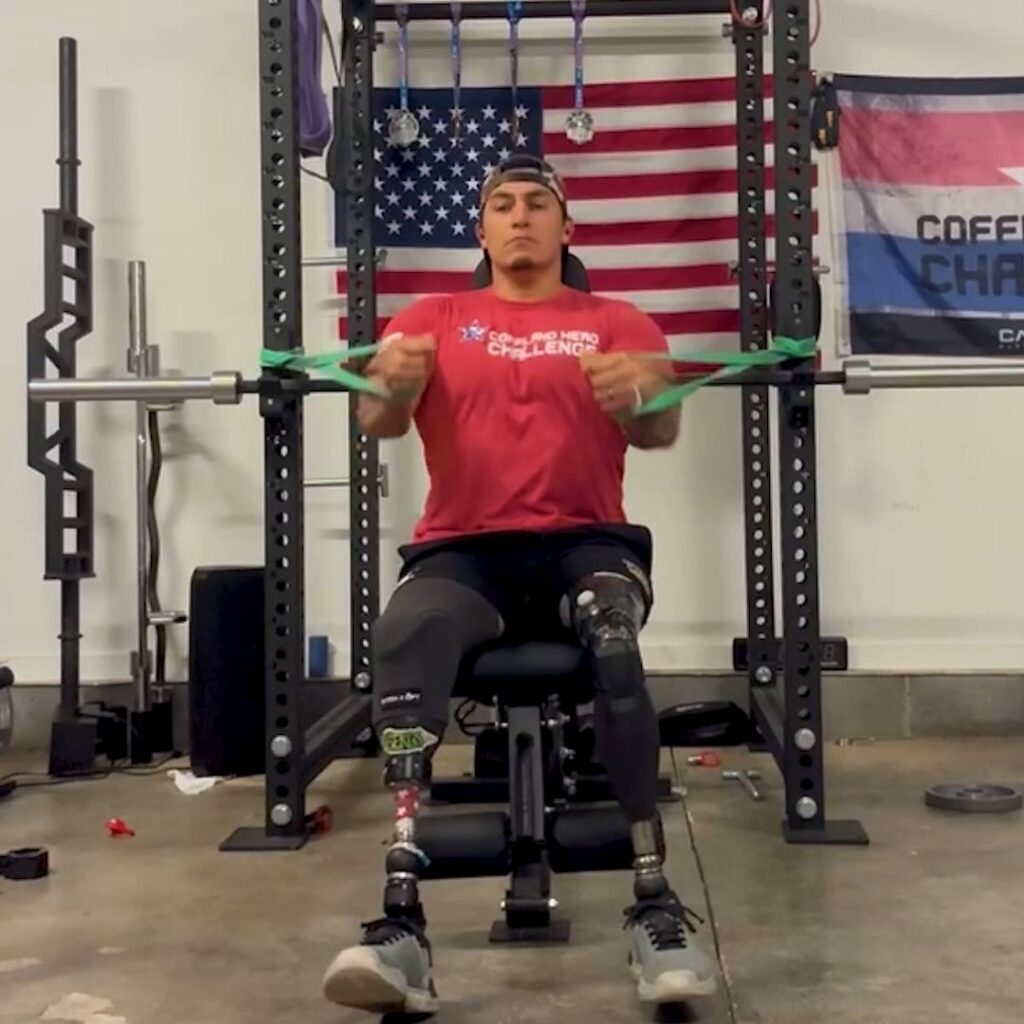
Banded adaptive chest press
The Banded Chest Press, which uses a band, is designed to strengthen the chest muscles. Set the band around a stable surface at chest height and stand or sit in the center, holding one part of the band in each hand. Step forward with one foot ahead for balance, keeping your core engaged and back straight. Start with your elbows bent and the band at chest level. Press the band forward until your arms are fully extended, squeezing your chest at the end of the movement. Slowly return to the starting position and repeat with the desired Sets and Reps.
Common mistakes: Bending and straightening the back during the movement, often caused by lack of awareness, weak abdominal muscles, or weak chest muscles. Alternatively, it may occur when attempting to lift heavier weight by leaning the upper body forward. Correction: Focus on maintaining a neutral spine throughout the exercise by engaging the core and ensuring the correct band for your strength level.
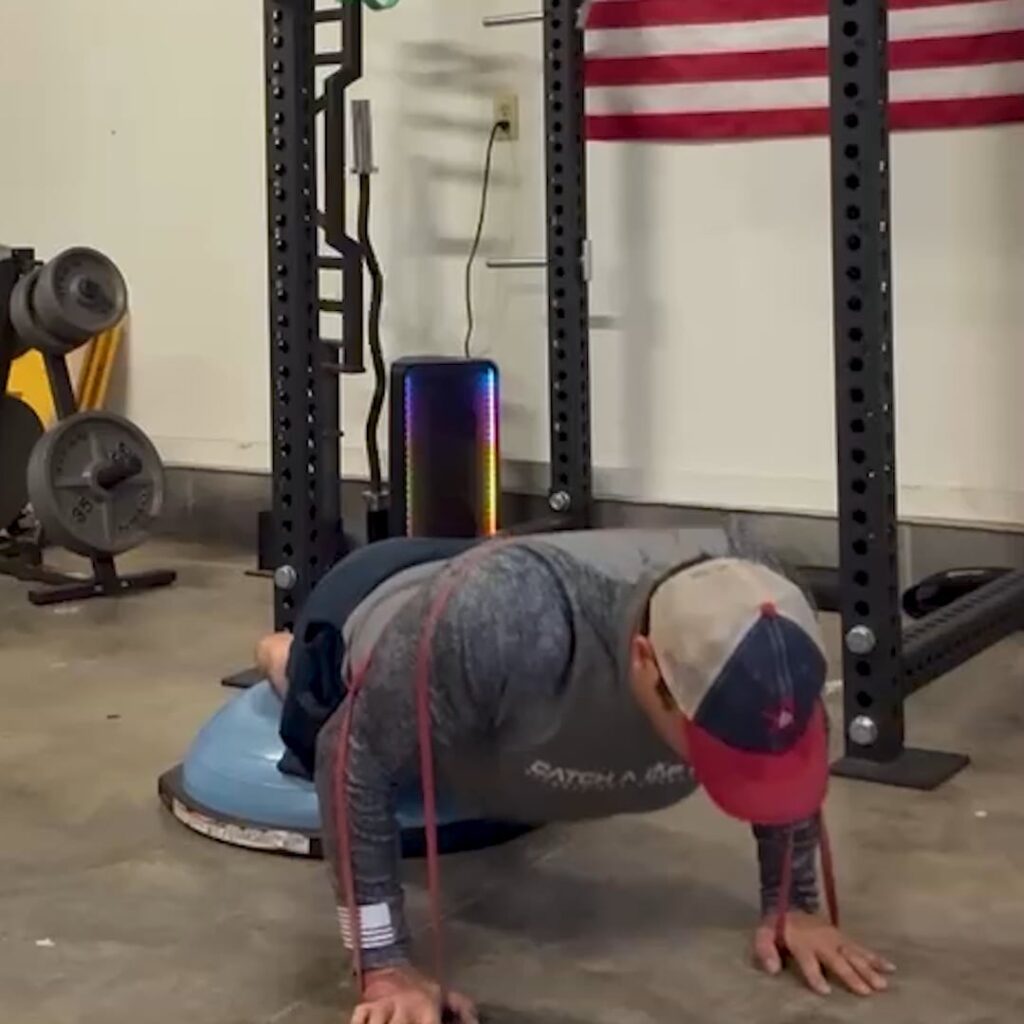
Banded adaptive pushups
The push-up with a resistance band is a variation of the traditional push-up that adds resistance to further challenge the chest, shoulders, and triceps. Set Up: Loop Resistance band around your back, holding each end under your hands on the floor. Get into a standard Push Up Posiiton, which you can be feet or knees on the floor or knees on a platform of some kind. Hands are slightly wider than shoulder width. Lower your chest toward the floor, keeping your elbows at a 45 degree angle and push back up to the starting position. Repeat for the desired number of Sets and Reps.
Common mistakes: Scapular collapse during push-up. Letting the chest sink and the shoulder blades collapse inward during the descent shifts the focus away from the shoulder joint and reduces upper body stability. To correct this, maintain control of the scapula by actively engaging the serratus anterior and focusing the movement at the shoulders and elbows, not through passive scapular retraction.